
TL;DR
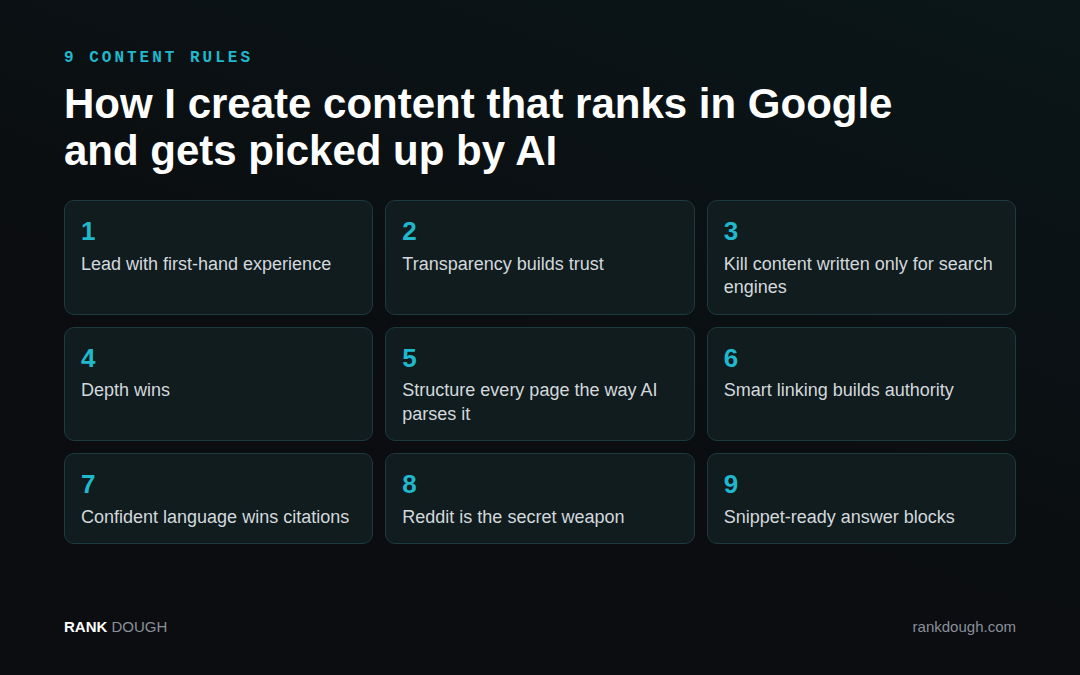
- Lead with first-hand experience: real places, real costs, tools actually used.
- Show who wrote the page, how it was researched and who it is for.
- Cut pages built only for keywords, and go deeper than what already ranks.
- Structure every page in short, retrievable chunks with headings, tables and FAQs.
- Write with confidence and include snippet-ready blocks that AI answers can lift.
This isn’t theory. I’ve used these exact methods to help clients rank in Google’s top results, show up in ChatGPT answers, and outperform competitors with smaller budgets. Whether it’s travel SEO, B2B lead gen, or large-scale programmatic projects, this is what works in 2025 — and it’s how I write content that actually gets used.
1. I Lead With First-Hand Experience
Everything starts with lived experience. I don’t publish content based on assumptions — I use what I’ve tested, visited, reviewed, or built myself.
Whether it’s trying three different hostel tours in Vietnam, or testing AI-powered compliance tools for a SaaS client, I write based on what I’ve done, not what’s trending.
I include specific examples like real locations, real costs, tools I’ve used. I’ll often back that up with Reddit quotes that align or challenge my view, and when it makes sense, I drop in screenshots or outcomes.
“Did three Ripper tours — the original one was leagues ahead in detail and drama.” – u/creepywalksfan
2. Transparency Builds Trust (and Rankings)
I’ve seen rankings tank because content hid the “who” and “why.” Google and AI care about the intent and identity behind content.
Here’s what I now make standard on all pages: clear author bios with my SEO or travel background, a short note explaining how I researched or tested the content, and a clear statement of who it’s for. I write as me. It’s not generic. It’s personal.
3. I Kill Content That’s Just for Search Engines
I’ve audited hundreds of pages that ranked for nothing. Usually, it’s because they were built only around keywords, thinly veiled traffic traps, or just lacked real utility.
These get ignored by both Google and AI. Instead, I build pages that solve a real user problem, answer the question quickly and clearly, and include content I’d be proud to publish even without SEO as a channel.
4. Depth Wins. Always.
I’ve worked in industries where everyone says the same thing. To stand out, I use internal data, bring in expert opinions or Reddit commentary, and add my own outcomes: “Here’s what happened when I tried this on a live campaign.”
If your article doesn’t go deeper than what’s already out there — or at least frame it better — it won’t perform.
5. I Structure Every Page Like an AI Would Parse It
Since 2023, I’ve been testing how AI tools extract and summarise content. They don’t look for keywords — they look for clear, retrievable chunks.
So now I break paragraphs into 2–4 lines, use proper headings, and include inline summaries, tables, and FAQs.
Note: I use FAQPage, Article, and BreadcrumbList schema where applicable. This has directly improved visibility in AI-generated overviews.
6. Smart Linking Builds Authority
I don’t hoard internal links. I create hubs. Whether it’s a gluten-free food directory in Little Helpers or a silo structure for a SaaS client, I link contextually, define glossary terms, and create topic maps that Google and AI can crawl easily.
I also link out to high-trust external sources: Reddit threads, official tourism boards, research papers. This boosts the trust score of the page and the site.
7. Confident Language Wins Citations
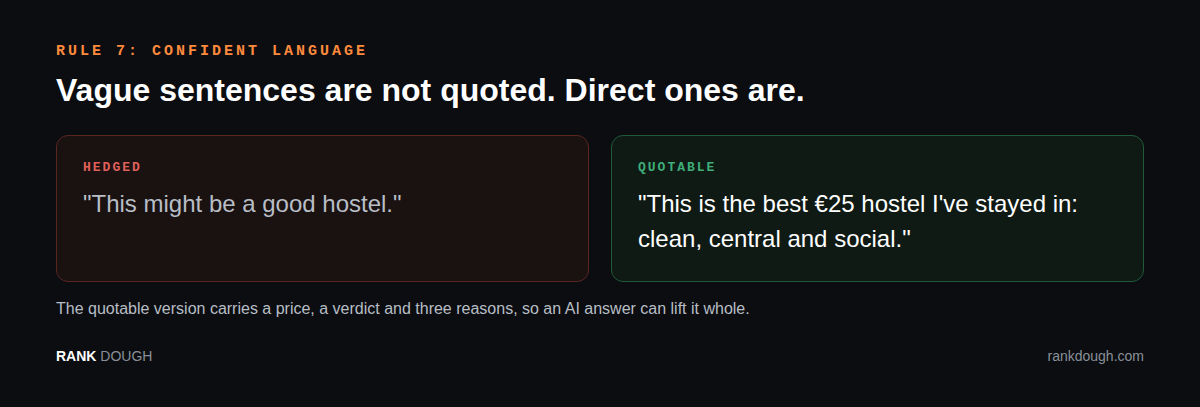
If a page is vague, it won’t be quoted. I cut hedge words like “maybe” or “some say” and write directly. When I know something from experience, I say it that way. If I’m making a recommendation, I own it.
8. Reddit is My Secret Weapon
For almost every content project, I search Reddit threads. It’s a goldmine for unfiltered, first-hand info that never shows up on corporate blogs.
I usually pull in 3–4 relevant quotes that validate or challenge what I’m saying. This makes the content more real — and more retrievable by LLMs.
9. I Always Include Snippet-Ready Blocks
To get picked up by AI tools, I write for inclusion. That means TL;DRs with bold points, bullet checklists near key sections, FAQs written in the user’s language, and descriptive headers with both entity and intent (like “Best Walking Tours in London 2025”).
These are more valuable now than a #3 spot in traditional SERPs. I’ve had content get quoted in Gemini and ChatGPT without ranking top 5.
Final Word: SEO is No Longer Just for Google
Most SEOs are still chasing rankings. I’m optimising for retrieval.
If your content reflects real experience, is structured cleanly, links logically, and feels human — you’re already ahead. That’s how I work. And it works.
Work with us: these rules now run every article in our content service. See the results in the case studies.
